

Stop saving pennies on a wipe to spend thousands on probe repair!

-
 21% off Save $25.19 USD
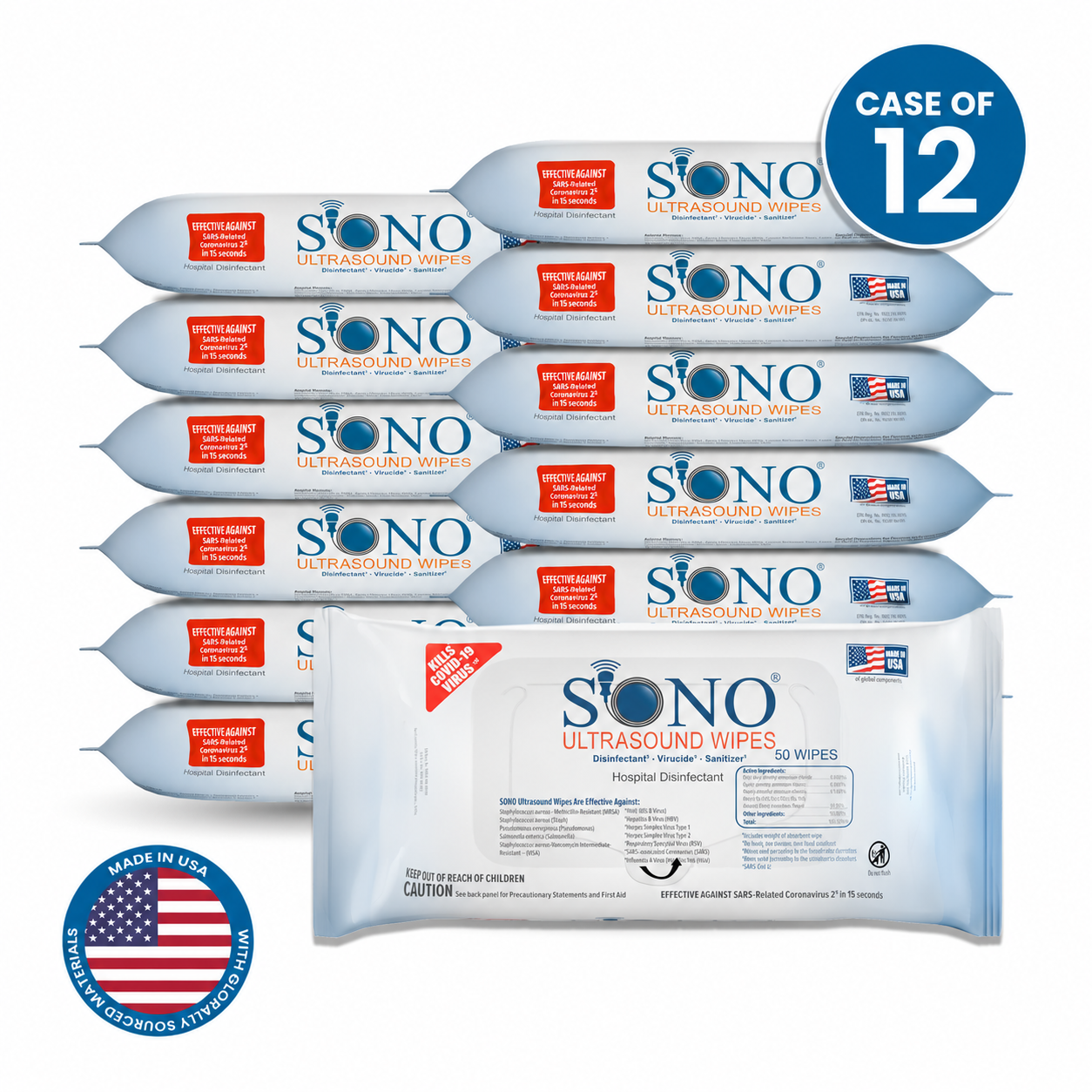
SONO Ultrasound Wipes - Case of 12 (50 Count) Soft Packs SONO4018
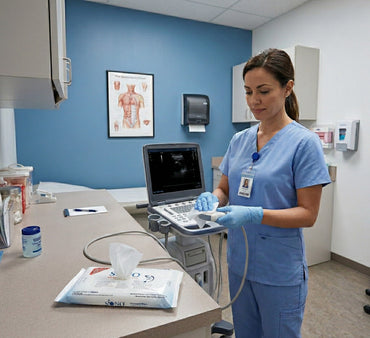
Protect your equipment with SONO Ultrasound Disinfecting Wipes, specifically formulated for use on ultrasound machines and transducers in healthcare, dental,...
$89.80 USD $114.99 USD$89.80 USD$89.80 USD $114.99 USD -
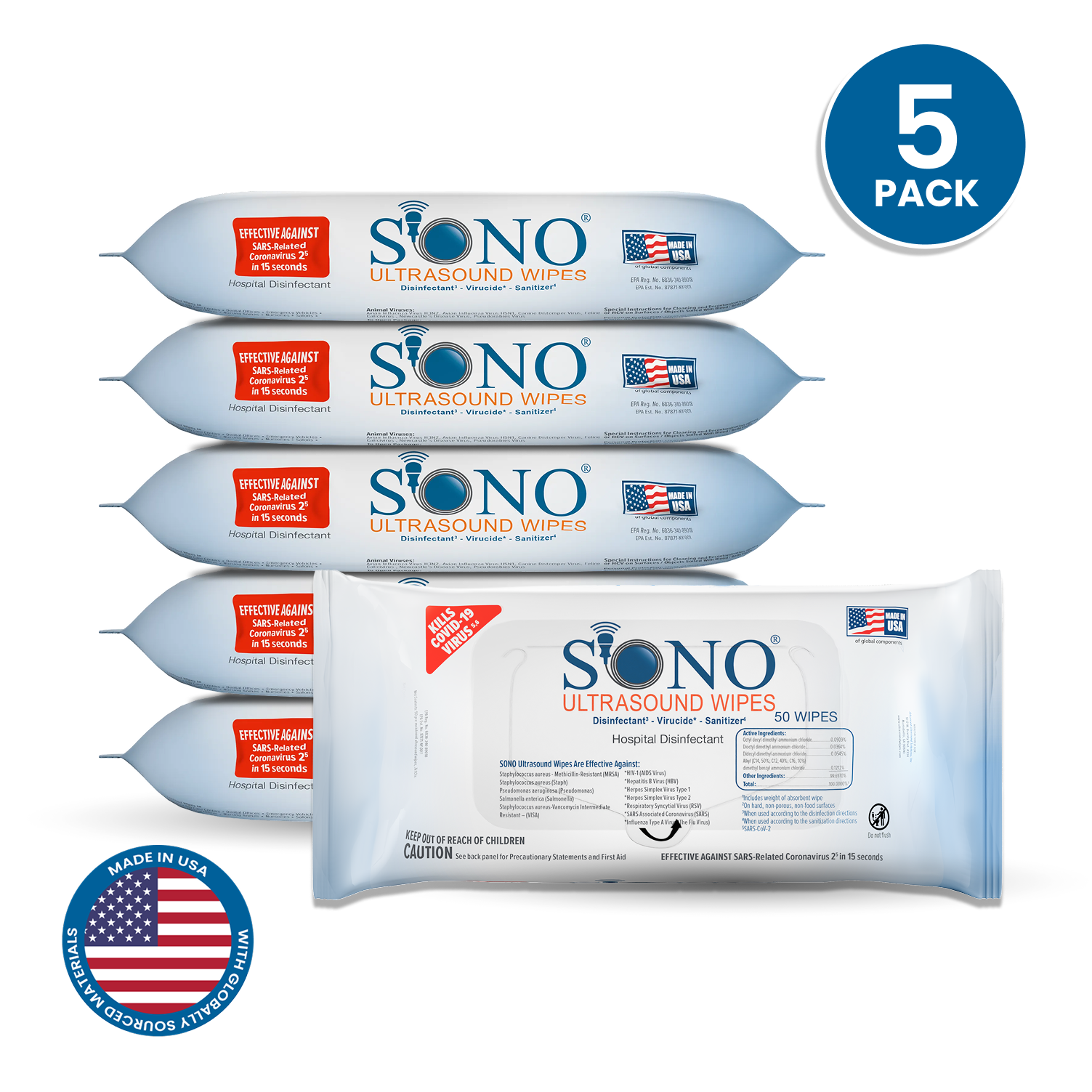
Ultrasound Probe Disinfecting Wipes | EPA Registered Medical Equipment Safe | 50 Count | SONO
Protect your equipment with SONO Ultrasound Disinfecting Wipes, specifically formulated for use on ultrasound machines and transducers in healthcare, dental,...
From $14.99 USD $14.99 USD$14.99 USD$14.99 USD $14.99 USD
EPA Reg. #6836-340-89018 · Hospital Disinfectant · Virucide · Fungicide · Made in USA · Est. 2011
Stop Saving Pennies on a Wipe to Spend Thousands on Probe Repair
Traditional alcohol-based and abrasive cleaners cause drying, cracking, and delamination of the acoustic lens — the leading cause of ultrasound image degradation and equipment failure. SONO is the only wipe engineered from day one specifically for transducer safety.
Fastest kill claim · FDS verified
SARS-CoV-2 (COVID-19)
Staphylococcus aureus · Klebsiella pneumoniae
Campylobacter jejuni
Surface must remain visibly wet
Kill claims — all contact times directly from the FDS
SONO Wipes are a one-step Hospital Disinfectant, Virucide, Fungicide, Mildewstat, and Cleaner. All claims below are EPA-registered and verified per EPA Guidelines for Presaturated Towelettes for Hard Surface Disinfection. Surface must remain visibly wet for the full contact time.
Staph aureus · Klebsiella pneumoniae · Campylobacter jejuni
(AIDS Virus)
including MRSA, VRE, Hep B & C, Influenza A, RSV, Herpes HSV-1 & HSV-2, SARS Coronavirus
Rotavirus
-
4 minStaphylococcus aureus (MRSA) EPA List MCommunity-associated strains NRS 384 USA300 & NRS 123 USA400
-
4 minStaphylococcus aureus (VISA)Vancomycin-intermediate resistant · CDC HIP-5836
-
4 minStaphylococcus aureus — Multi-drug resistantMDR: Tetracycline, penicillin, streptomycin, erythromycin
-
4 minEnterococcus faecalis (VRE) MDRVancomycin-resistant
-
4 minAcinetobacter baumanniiNosocomial pathogen · septicemia, meningitis, UTI
-
4 minKlebsiella pneumoniaeGram-negative · pneumonia, UTI, bacteremia
-
4 minPseudomonas aeruginosaCommon healthcare-associated infection pathogen
-
4 minEscherichia coli O157:H7ATCC 35150 · Hemorrhagic colitis
-
4 minEscherichia coli ESBL MDRExtended-spectrum beta-lactamase producing, antibiotic resistant
-
4 minBurkholderia cepacia3 strains tested · ATCC 6871, 25416, 25608
-
4 minLegionella pneumophilaCausative agent of Legionnaires' disease
-
4 minListeria monocytogenesFoodborne pathogen · neonatal meningitis risk
-
4 minStreptococcus pyogenesGroup A Strep · ATCC 12344
-
4 minSalmonella typhiTyphoid fever causative agent · ATCC 6539
-
15 secCampylobacter jejuniLeading cause of bacterial gastroenteritis
-
4 minEnterobacter aerogenesBacteremia, respiratory, wound & UTI
-
4 minSerratia marcescensHospital-acquired infection pathogen
-
4 minShigella dysenteriaeBacterial dysentery · ATCC 9380
-
4 minVibrio choleraeCholera · ATCC 14035
-
4 minSalmonella schottmuelleriATCC 10719
-
4 minSalmonella enterica (choleraesuis)ATCC 10708
-
15 secSARS-CoV-2 (COVID-19) EPA List NEPA Emerging Pathogen Policy · eligible claim
-
1 minHIV-1 (AIDS Virus)HTLV-IIIB · Electronucleonics Inc.
-
4 minHepatitis B Virus (HBV)Hepadnavirus · serum hepatitis causative agent
-
4 minHepatitis C Virus (HCV)Bovine Viral Diarrhea Virus surrogate · enveloped RNA
-
10 minNorovirus (Norwalk) EPA List GFeline Calicivirus surrogate · University of Ottawa
-
10 minRotavirusStrain WA · leading cause of pediatric gastroenteritis
-
4 minInfluenza A (H1N1)A/Brazil 11/78 · ATCC VR-1469 A/PR/8/34 · Pandemic 2009 H1N1
-
4 minInfluenza A (H7N9)2013 novel avian-origin influenza strain
-
4 minAvian Influenza (H3N2 & H5N1)ATCC VR-2072 · CDC#2006719965
-
4 minRespiratory Syncytial Virus (RSV)VR-26 · high-risk for neonates & immunocompromised
-
4 minSARS CoronavirusStrain 200300592 · original SARS-CoV
-
4 minHuman CoronavirusATCC VR-740 · common respiratory illness strain
-
4 minHerpes Simplex Virus (HSV-1 & HSV-2)VR-733 Strain F · VR-734 Strain G · HSV encephalitis risk
-
4 minVaccinia VirusWyeth strain · orthopoxvirus family indicator
-
8 minCandida albicansATCC 9533 · most common fungal HAI pathogen
-
4 minTrichophyton mentagrophytesRingworm · athlete's foot causative dermatophyte
-
4 minAspergillus niger (Mildewstat)ATCC 6275 · environmental mold · aspergillosis risk
All claims per SONO FDS — Advanced Ultrasound Solutions Inc. · EPA Reg. #6836-340-89018 · Contact times require surface to remain visibly wet with 5% organic soil load per EPA test method. Download the full FDS at sonosupplies.com for complete methodology and strain references.
What the field reports — biomed engineers & probe repair specialists
Sourced from biomedical engineering forums, independent probe repair companies, acoustic laboratories, and peer-reviewed literature — not marketing claims. Alcohol damage is documented, recurring, and often begins within months.
"The insulation is going yellow and cracking at the strain relief end after about 6 months. The probe is used daily and cleaned about 15 times a day."
EBME Biomedical Engineering Forum — NHS Trust, UK · 2018
Damage onset: ~6 months"Transducer after transducer comes in with clear signs of alcohol damage — dry and cracking lenses, stiff and brittle strain reliefs, and yellow discolouration."
ProbeLogic — Independent Probe Repair Specialist · 2022
Recurring across all probe types"Alcohol-based wipes on the lens tends to dry the lens and make it detach from the probe." Requires immediate removal from clinical service.
Acertara Acoustic Laboratories — Common Probe Failures
Clinical consequence: out of servicePublished study confirmed accelerated material aging and structural compromise in probes cleaned with alcohol-based disinfectants.
ResearchGate — Peer-reviewed study · April 2010
Lab-confirmed accelerated agingWhat SONO protects & where it can be used
Compatible with most ultrasound transducers. QAC active ingredient — the class recognized in most OEM disinfection guidelines. Also safe on patient monitors, ECG/EKG machines, mammography compressor plates, CPAP devices, bed rails, call buttons, and computer keyboards. Always check your device's user manual.
Acoustic lens
Zero delamination, drying, or detachment across 5,000+ simulated cycles — the most common alcohol-related failure mode per Acertara Acoustic Laboratories.
Cables & strain relief
No cracking, stiffening, or yellowing. Eliminates the damage pattern documented in recurring NHS biomed and ProbeLogic repair intake reports.
Housing & adhesives
No surface crazing or bond failure. Tested on medical-grade cyanoacrylates and epoxies — zero degradation in 5,000+ simulated cycles.
Patient monitors & ECG/EKG
Safe on patient monitoring units, ECG machines, cables, and stress units — recommended in SONO's clinical use documentation.
NICUs & pediatric suites
Low-VOC formula reduces airborne compound exposure versus alcohol-based alternatives. Well-suited for enclosed neonatal and pediatric imaging environments.
Veterinary & portable probes
Safe for small animal, equine, and large animal diagnostic transducers, portable POCUS devices, and veterinary ultrasound systems.

Damage Mitigation is our specialty!
Prevent extensive damage to your transducers!
Switch to the wipes that speak to ULTRASOUND
and are The Sonographer's Choice!
Ultrasound Equipment & Transducer Care FAQ

Are SONO Ultrasound Wipes safe for all transducer brands?
Yes. SONO wipes are specifically formulated to be alcohol-free, bleach-free, and solvent-free, making them compatible with major brands like GE, Philips, Siemens, and Samsung. They are designed to disinfect without causing "pitting" or degradation of the sensitive acoustic lens and materials of the transducers. (always consult your users manual)
Do these wipes meet EPA requirements for medical disinfection?
Absolutely. SONO Ultrasound Wipes are EPA-registered and hospital-grade. They are proven to kill 47+ pathogens, including MRSA, HIV, and SARS-CoV-2, ensuring your clinic meets strict infection control protocols.
Can I use these wipes on the ultrasound touchscreens and cables?
Yes. Because our formula contains no harsh abrasives or alcohols, it is safe for the entire ultrasound machine, including the console, cables, and touchscreens, preventing the yellowing or cracking often caused by standard wipes.
What is the "contact time" for SONO Ultrasound Wipes?
SONO Ultrasound wipes offer a fast and effective disinfection profile. For most common bacteria and viruses, the surface should remain visibly wet for the duration specified on the EPA master label (typically 2–4 minutes) to ensure complete efficacy. In some cases as fast as 15 seconds