Home gym equipment represents a real investment, and most people who have made that investment think more carefully about how to load a barbell than about how to clean one. That is understandable, but it leaves a hygiene gap that compounds quickly. Gym equipment is among the most bacteria-laden surfaces in any home. It collects sweat, skin cells, and hand contact continuously during use, often sits in a room with limited airflow, and gets wiped down far less frequently than it should. A 2014 study by FitRated found that free weights at commercial gyms carry 362 times more bacteria than a toilet seat. Home gym equipment is used less by more people, so the absolute load is lower, but the cleaning frequency is typically lower too, and the net result is equipment that is considerably less clean than most owners assume.
The disinfection piece is not complicated, but it does require using the right product for each surface type. Rubber mats, vinyl bench padding, foam handles, metal weight surfaces, and electronic display panels all respond differently to disinfecting products, and the wrong product on the wrong surface causes cumulative damage that shows up months later in cracked vinyl, degraded rubber, and corroded metal. Getting this right is a ten-minute weekly task that protects both the equipment and the people using it.
Why Is Home Gym Equipment Such a Hygiene Problem?
The conditions that make gym equipment a high-bacteria environment are almost perfectly engineered into how we use it. Exercise produces sweat, which is warm and moisture-rich and provides exactly the substrate that bacteria need to multiply. That sweat is deposited directly onto the surfaces of handles, bench padding, and mats in large quantities during every workout. It does not evaporate cleanly. It soaks into foam grips and rubber mat textures, pools on flat metal surfaces, and works into the seams and bolt recesses of weight machines.
Beyond sweat, skin contact transfers whatever microorganisms are present on the hands to every surface touched during training. This is continuous and inevitable. Every rep of every exercise transfers some degree of cutaneous bacteria to the handle of the weight or bar being gripped. Over the course of a full workout, the total surface area contaminated and the total organism count deposited are both substantial.
The environment compounds the problem. Many home gyms are in garages, basements, or spare rooms that are not part of the home's main climate control system. These spaces tend to be warmer in summer, less well-ventilated year-round, and more humid than the main living areas of the house. Warm, humid, poorly ventilated spaces are optimal conditions for bacterial proliferation on the surfaces within them.
The organisms most commonly found on gym equipment in research studies include Staphylococcus aureus, which causes skin infections and is the organism responsible for MRSA, Klebsiella pneumoniae, E. coli, and various Streptococcus species. These are not organisms that cause illness only in immunocompromised people. They cause skin infections, respiratory illness, and gastrointestinal illness in otherwise healthy adults, and they transfer readily from contaminated handles and mat surfaces to hands, faces, and open skin abrasions that are common in training environments.
What Does Each Surface Type Actually Need?
The reason one-size-fits-all disinfection does not work for home gym equipment is that the materials involved have genuinely different chemical tolerances, and the damage caused by mismatched products accumulates silently until the surface visibly fails.
Rubber flooring and rubber mats are the surface category most commonly damaged by standard disinfecting wipes. Rubber is a polymer compound that alcohol and bleach both attack in different but complementary ways. Alcohol is a solvent that extracts plasticizers from rubber compounds over time, leading to surface hardening, brittleness, and cracking. Bleach is an oxidizer that degrades the polymer chains in rubber, causing surface degradation, color bleaching, and eventually structural breakdown of the mat material. High-quality rubber flooring for home gyms is not inexpensive. Replacing it because the cleaning product accelerated its degradation is a cost that should be entirely avoidable.
Vinyl bench padding and seat upholstery on weight machines is the surface category where the damage from alcohol is most visible and most economically significant. Vinyl is a polyvinyl chloride compound that alcohol dehydrates progressively with each application, stripping the plasticizers that keep the vinyl flexible. The result, over months of regular cleaning with an alcohol wipe, is vinyl that first becomes slightly tacky, then stiff, then begins cracking along the seams and at points of flexion where users sit and change position. A quality adjustable weight bench runs several hundred to over a thousand dollars. Premature vinyl failure from chemical damage is a direct financial consequence of using the wrong wipe.
Foam handles and grips on cable machines, resistance equipment, and cardio machines are among the most contact-intensive surfaces in any home gym and among the most chemically sensitive. Foam used in equipment grips is typically an open-cell or closed-cell polyurethane or EVA compound. Alcohol causes surface hardening and brittleness in foam grips that first manifests as a change in texture, then as surface crumbling, and eventually as grip failure. Bleach causes similar degradation through oxidative attack on the foam polymer structure. Replacing grip covers or foam handles on a cable machine is a nuisance. Preventing the degradation through correct product selection requires no additional effort at all.
Metal weight surfaces, including the knurling on barbells and dumbbells, weight plates, and the metal frames of machines, are more chemically resistant than rubber, vinyl, or foam but are not immune. Bleach in particular causes progressive oxidation of bare metal surfaces, accelerating rust formation on iron plates and causing pitting and corrosion on stainless steel and chrome finishes. Regular bleach exposure on barbell knurling leads to roughening and rust that degrades grip texture and makes the bar increasingly difficult to clean over time. Alcohol at high concentrations can strip oil from metal surfaces and contribute to surface drying that creates similar rust conditions, particularly in humid home gym environments.
Electronic displays and control panels on treadmills, rowing machines, bikes, and smart gym equipment have the same oleophobic coating and screen sensitivity concerns as phones and laptops. Alcohol strips screen coatings. Bleach will corrode the plastic housings and degrade the electrical components in control panels if it seeps into seams or buttons. These surfaces need an electronics-compatible product, meaning alcohol-free and bleach-free, applied lightly with no pooling around openings.
What Is the Right Product and Why Does the Formula Matter?
The disinfecting wipe that works safely and effectively across all of the surface types in a home gym is one formulated with benzalkonium chloride as the active ingredient and without alcohol or bleach. BZK at standard disinfecting concentrations between 0.1% and 0.3% is effective against the bacteria and viruses that accumulate on gym surfaces, including Staphylococcus aureus, E. coli, MRSA, Influenza A, and a range of other pathogens, without the solvent and oxidizing properties that cause the material damage described above.
The reason BZK works on all of these surfaces without causing damage is that it is not a solvent and not an oxidizer. It kills pathogens by disrupting cell membranes through a physical chemistry mechanism that does not require attacking the polymer compounds, metal surfaces, or adhesive systems in gym equipment. It can be applied to rubber without extracting plasticizers. It can be used on vinyl bench padding without dehydrating the PVC compound. It will not rust metal or corrode chrome. It will not strip screen coatings on electronic displays.
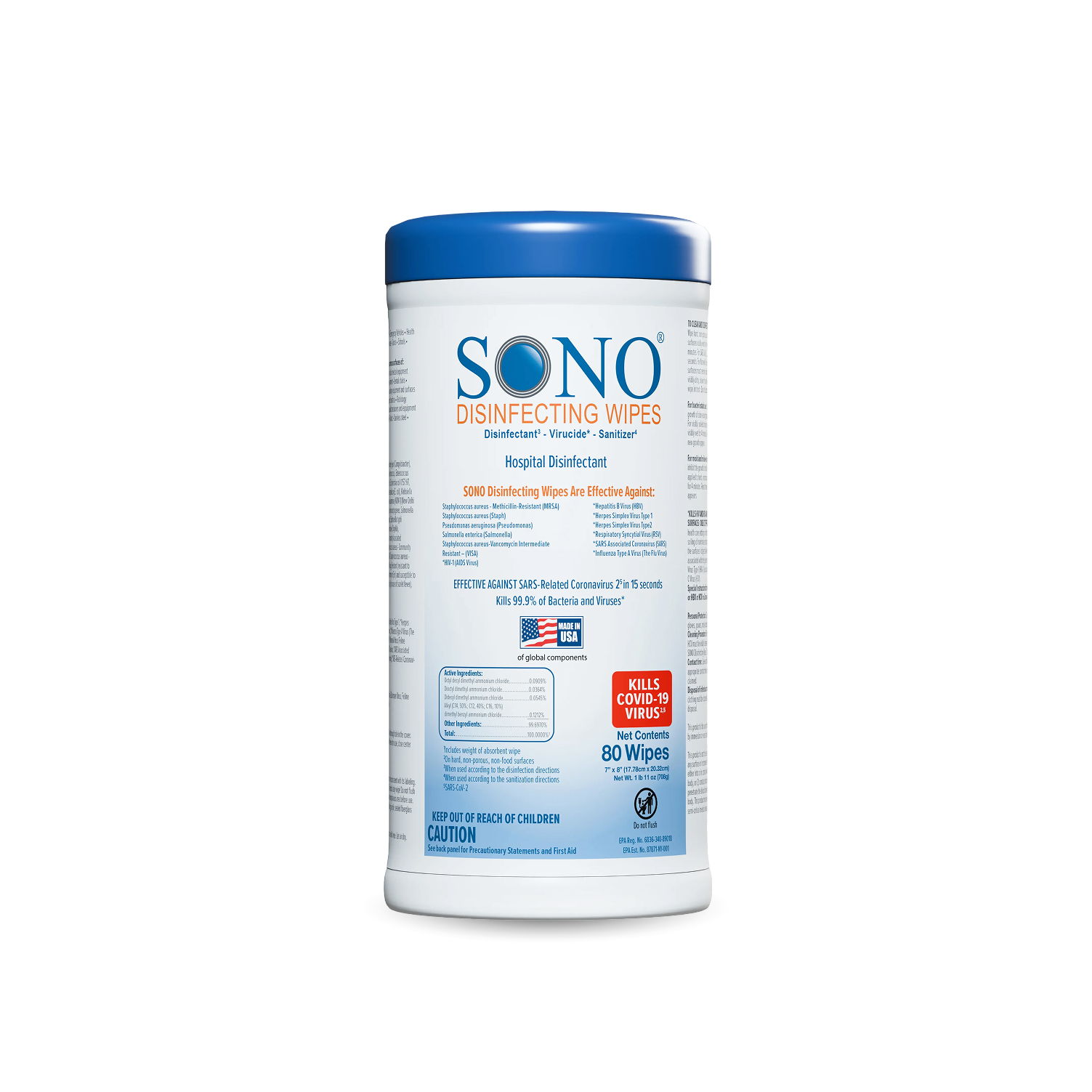
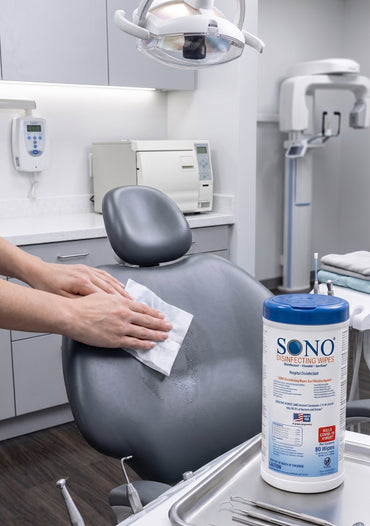
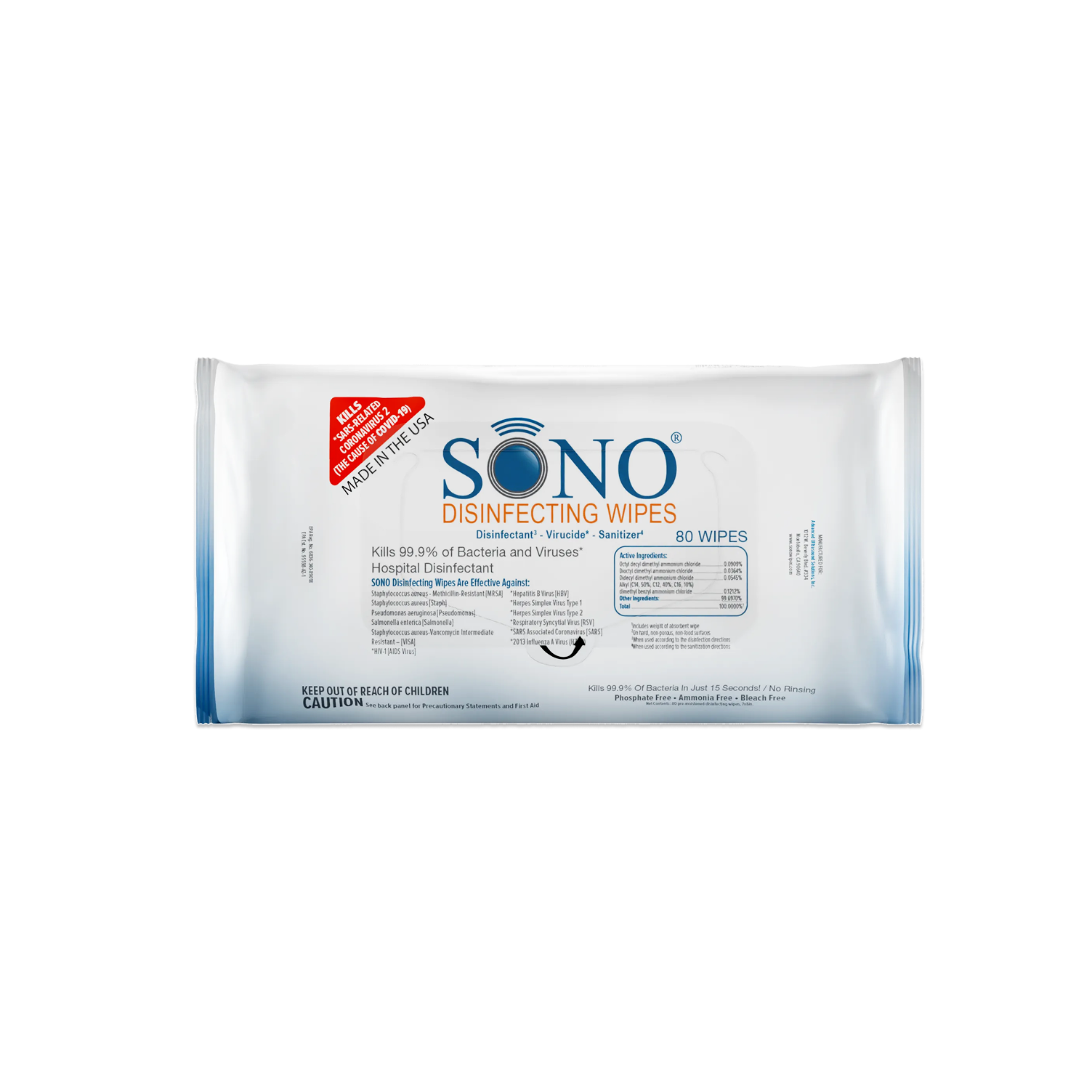
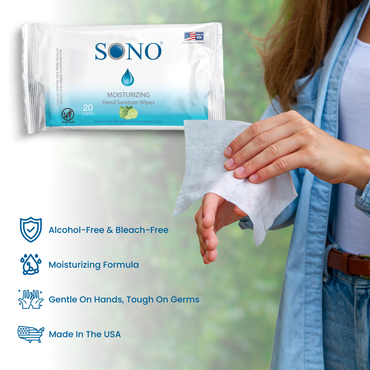
SONO Supplies' disinfecting wipes use a BZK formula, are alcohol-free and bleach-free, and are tested for compatibility across the surface types found in gym and fitness environments. The one-minute contact time means the wipe stays wet on the surface long enough to complete the kill cycle before drying, which matters on the warm surfaces of gym equipment where thin alcohol wipes often dry before their contact time is reached.
Surface saturation matters too. A wipe that is too lightly saturated will dry before the contact time completes, particularly on rough rubber mat textures and knurled metal surfaces where the increased surface area accelerates evaporation. A wipe with appropriate saturation level delivers consistent coverage and maintains the wet surface contact needed for full efficacy.
What Should Your Cleaning Frequency and Routine Actually Look Like?
The right cleaning frequency for home gym equipment depends on usage intensity, how many people use the space, and whether any of them are currently ill or have been recently. A general framework that works for most home gym situations divides the routine into post-workout wipe-downs and weekly deeper cleans.
After each workout, the highest-contact surfaces should be wiped down before you leave the gym. This means the handles and grips you used during that session, the bench surface your back and body contacted, and any mat surface you trained on directly. This post-workout wipe takes two to three minutes and prevents sweat from soaking into porous surfaces over hours, which is both harder to disinfect and more likely to produce the musty smell that develops in home gyms with inconsistent cleaning.
The post-workout wipe does not need to cover every piece of equipment in the gym every session. It covers what you actually used that day. If you did a pull day and touched barbells, a cable machine, and a pull-up bar, those surfaces get wiped. If the squat rack sat unused that session, it can wait for the weekly clean.
The weekly deeper clean covers everything in the gym, whether it was used that week or not. Dust and particulates settle on all surfaces, and surfaces not in active use still carry residual contamination from previous sessions. The weekly clean should include all floor mat surfaces with particular attention to high-traffic areas, all weight surfaces including plates and dumbbells, all machine frames and upholstery, and any cardio equipment display panels and handles. Thirty to forty minutes once a week handles this comprehensively for most home gym configurations.
If someone in your household has been ill with a respiratory or gastrointestinal illness, wipe down the gym before your next workout regardless of when your scheduled weekly clean falls. Illness-related pathogens can survive on surfaces for extended periods, and the gym is a space where elevated breathing and hand-to-face contact create efficient transmission conditions.
What About Gym Bags, Gloves, and Accessories?
The disinfection routine for a home gym is not complete if it stops at the equipment and ignores the accessories that move between the gym, the rest of the house, and any outside environments.
Gym bags sit on locker room floors, on gym mats, and in car trunks before coming into your home. The exterior of a gym bag that has traveled through public environments carries a meaningful contamination load that transfers to whatever surface you set it on inside your home. Wiping the exterior base and handles of your gym bag after returning from any outside training session is a quick and effective way to interrupt that transfer.
Lifting gloves, lifting straps, and wrist wraps accumulate sweat and skin bacteria throughout their use and are typically made from leather, neoprene, or nylon fabrics that cannot be effectively disinfected with a surface wipe. These items should be allowed to dry thoroughly after each use, washed or laundered regularly, and replaced when they show significant wear or develop persistent odor that washing does not resolve.
Resistance bands are a surface type that gets overlooked in most gym cleaning routines despite being in direct hand contact during use. Latex and fabric resistance bands can be wiped with a compatible disinfecting product, allowed to dry fully, and stored in a clean container rather than left loose on the gym floor. Foam rollers and massage balls are similar, high-contact surfaces that pick up whatever is on the floor and on skin during use, and should be included in the weekly clean rotation.
Frequently Asked Questions
How often should I replace rubber gym mats even with proper cleaning?
Quality rubber gym mats cleaned with compatible products should last ten years or more under normal home gym use. The primary factors that shorten mat life are mechanical wear from heavy equipment, UV exposure in gyms with direct sunlight, and chemical damage from incompatible cleaning products. If your mats are showing surface cracking, crumbling edges, or significant discoloration within the first few years, the cleaning product is the most likely cause. Switching to an alcohol-free, bleach-free product and maintaining a consistent but not overly aggressive cleaning frequency will maximize mat lifespan from that point forward, though material that has already degraded from chemical damage cannot be reversed.
Can I use the same wipe on my barbell and my treadmill screen?
Yes, if the wipe is alcohol-free and bleach-free with confirmed electronics compatibility. An alcohol-free BZK wipe applied lightly to a treadmill display will not damage screen coatings or corrode plastic housings, and the same wipe applied to a barbell shaft will clean the knurling without accelerating rust or stripping protective coatings. The versatility of a single compatible product across all surface types in a home gym is a practical advantage that simplifies the cleaning routine and eliminates the risk of accidentally using the wrong product on a sensitive surface. The only adjustment needed between surface types is application pressure. Electronics should be wiped lightly. Metal and rubber surfaces can tolerate more vigorous wiping where needed to remove visible residue.
Is it worth disinfecting home gym equipment if I am the only person who uses it?
Yes, for a few reasons. You are still depositing bacteria from your skin and environment onto equipment surfaces every session, and those bacteria multiply between uses in the warm, often humid conditions of a home gym. The skin pathogens most commonly found on gym equipment, including Staphylococcus species, can cause infections through contact with breaks in skin, which are common in training environments from calluses, cuts, and abrasions. Beyond infection risk, regular cleaning prevents the buildup of organic material that causes odor, degrades surface materials over time, and creates increasingly difficult cleaning tasks if left to accumulate. A twice-weekly wipe of contact surfaces and a weekly full clean is genuinely low effort for a single-user home gym and protects both your health and your equipment investment.
What is the best way to clean a foam roller without degrading the foam?
Foam rollers should be wiped with a compatible, non-solvent disinfecting wipe rather than submerged in cleaning solution or sprayed with aerosol products. Apply an alcohol-free wipe to the surface, allow the contact time to complete, and let the roller air dry in a standing or elevated position rather than on the floor. Avoid using alcohol-based wipes or bleach products on foam rollers, as both cause surface hardening and eventual crumbling of the foam structure. For foam rollers with fabric covers, remove the cover if possible and launder it separately on a gentle cycle, wiping the foam core directly. Store foam rollers in a clean, dry location rather than on the gym floor, where they accumulate floor contamination between uses even when not in active use.